
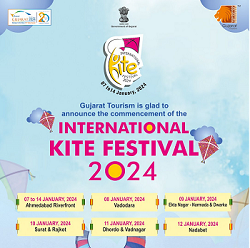
Every year on January 14, the Indian state of Gujarat celebrates Makar Sankranti, also known locally as Uttarayan—a festival synonymous with vibrant skies, joyful gatherings, and the age-old tradition of kite flying. Families and friends take to their terraces, engaging in friendly kite battles or simply enjoying the colorful spectacle overhead. While this festival has always been cherished within Gujarat, its global recognition is a relatively recent achievement.
The turning point came when Prime Minister Narendra Modi, during his tenure as the Chief Minister of Gujarat, envisioned showcasing this unique cultural celebration to the world. Under the broader Vibrant Gujarat initiative, the government launched the International Kite Festival (IKF) in Ahmedabad, which later expanded to other cities across the state.
This strategic move transformed a local celebration into a global cultural attraction. The festival began drawing renowned kite flyers and enthusiasts from across the world—each bringing their creativity, giant-themed kites, and distinctive styles. Their participation helped amplify the festival’s global appeal and positioned Gujarat as an international hub for kite-flying arts.
For artisans and kite makers, the impact has been life-changing. Traditionally, most kite makers—many from the Muslim community—worked seasonally with limited income and a small customer base. The growing popularity of the International Kite Festival opened new doors for them. Today, they receive orders from multiple countries and work year-round to meet demand. This cultural celebration has evolved into a thriving economic opportunity.
Veteran kite flyer Paavan Solanki from Ahmedabad recalls how the initiative changed his life:
“I got the chance to visit many countries and display my talent because of the festival. Earlier, foreigners used to laugh at our tiny Indian kites, but now they admire and replicate our designs,” he says with pride. The influx of international visitors has added to Gujarat’s tourism revenue, further strengthening the local economy.
Historian Rizwan Qadri highlights the festival’s deep roots:
“The beauty of Uttarayan is that it goes beyond age, religion, or social barriers. Everyone celebrates it with equal enthusiasm. It was once a local tradition, but Modi ji’s vision turned it into a global event. Today, it has grown into a massive industry generating crores of rupees.”
The International Kite Festival is now a symbol of Gujarat’s cultural richness, craftsmanship, and global connectivity. What began as a traditional roof-top festivity has blossomed into an international phenomenon—one that not only celebrates the joy of kite flying but also uplifts artisans, promotes tourism, and strengthens the state’s economy.