
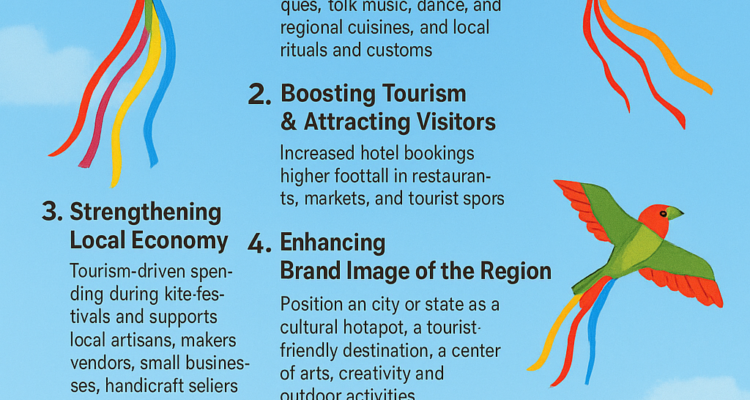
Kite festivals have evolved from simple community celebrations into powerful cultural and tourism-promoting events across the world. Organizing a kite festival not only brings people together in a joyful atmosphere but also creates long-term social, cultural, and economic benefits for the host region. These festivals celebrate creativity, craftsmanship, tradition, and unity while showcasing the unique identity of a place.
Below are the key benefits of organizing kite festivals to promote tourism and culture:
Showcasing Local Culture & Traditions
Kite flying is deeply rooted in history, folklore, and cultural expression. Festivals offer an opportunity to display:
Traditional kite-making techniques
Folk music, dance, and regional cuisines
Local rituals and customs associated with the event
By presenting these cultural elements, kite festivals help preserve heritage and pass it on to the younger generation. Visitors gain a deeper understanding of the local way of life.
Boosting Tourism & Attracting Visitors
Well-organized kite festivals attract large numbers of domestic and international tourists. These visitors contribute to:
Increased hotel bookings
Higher footfall in restaurants, markets, and tourist spots
Growth in local transportation and travel services
Many tourists plan their trips specifically around vibrant festivals, which significantly enhances the region’s tourism profile.
Strengthening Local Economy
Tourism-driven spending during kite festivals directly supports the economy. It benefits:
Local artisans and kite makers
Vendors, small businesses, and handicraft sellers
Event planners, caterers, photographers, and performers
The festival also creates seasonal employment opportunities and stimulates entrepreneurship.
Promoting Art, Creativity & Innovation
Kite festivals are creative platforms where artists experiment with shapes, colors, themes, and designs. Participants often showcase:
Giant kites
Thematic kites
LED/night-glow kites
Traditional hand-crafted designs
This encourages innovation, craftsmanship, and artistic excellence while giving artisans global visibility.
Encouraging Community Participation & Social Harmony
Kite festivals bring together people of all ages, backgrounds, and nationalities. They promote:
Unity and social bonding
Shared cultural experiences
A sense of belonging and joy
Such events foster harmony and strengthen community relationships.
Enhancing Brand Image of the Region
Regularly hosting a kite festival helps position a city or state as:
A cultural hotspot
A tourist-friendly destination
A center of arts, creativity, and outdoor activities
This contributes to improved global recognition and media coverage, further enhancing brand value.
Environmental Awareness Through Eco-friendly Kites
Many modern festivals encourage sustainable practices such as:
Use of biodegradable kite materials
Awareness campaigns about birds and wildlife
Cleanliness and plastic-free initiatives
This inspires responsible tourism and environmental consciousness.
Educational Value for Students & Youth
Workshops on kite-making, aerodynamics, wind patterns, and traditional crafts provide educational benefits.
Young participants learn:
Craftsmanship and technical skills
Teamwork and creativity
Cultural appreciation
Such learning experiences are fun, engaging, and memorable.
Promoting International Cultural Exchange
International kite flyers bring unique designs and stories from their countries. This enriches the festival experience and promotes:
Cultural exchange
Global friendships
International cooperation and goodwill
It turns the host city into a meeting point for cultural diversity.
Enhancing Recreation & Well-being
Kite flying is a stress-relieving outdoor activity. Kite festivals encourage:
Family outings
Healthy recreation
A break from routine life
The joyful environment improves mental well-being and contributes to overall happiness.
Conclusion
Organizing a kite festival is much more than a colorful celebration—it is an impactful tool for cultural preservation, tourism promotion, community engagement, and economic development. With thoughtful planning and participation, kite festivals can significantly enhance the cultural identity and tourism potential of any region while creating unforgettable experiences for visitors and locals alike.